Butter Chicken Recipe: The Real Mumbai Home Kitchen Secret (Not the Restaurant Version)

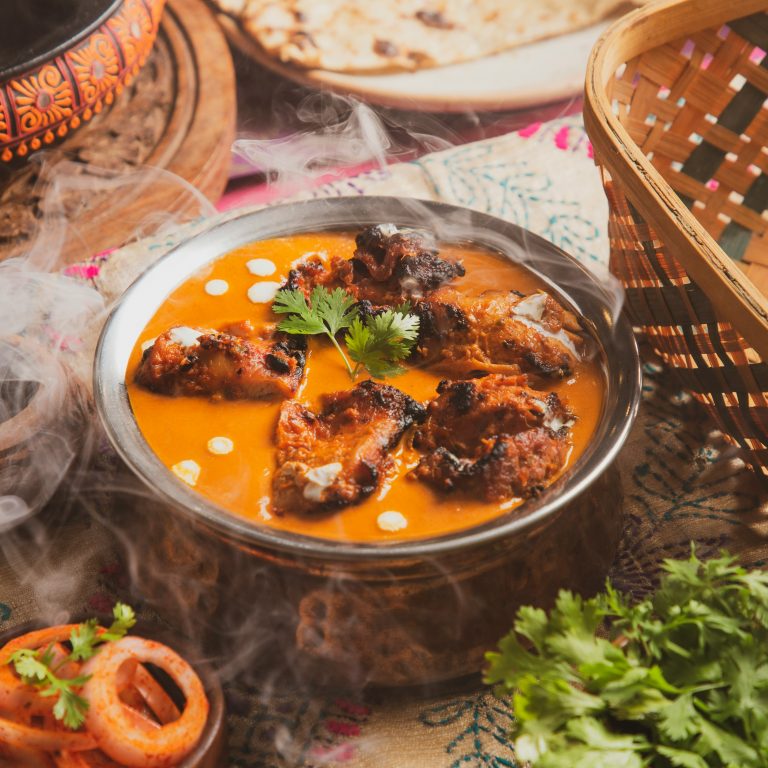
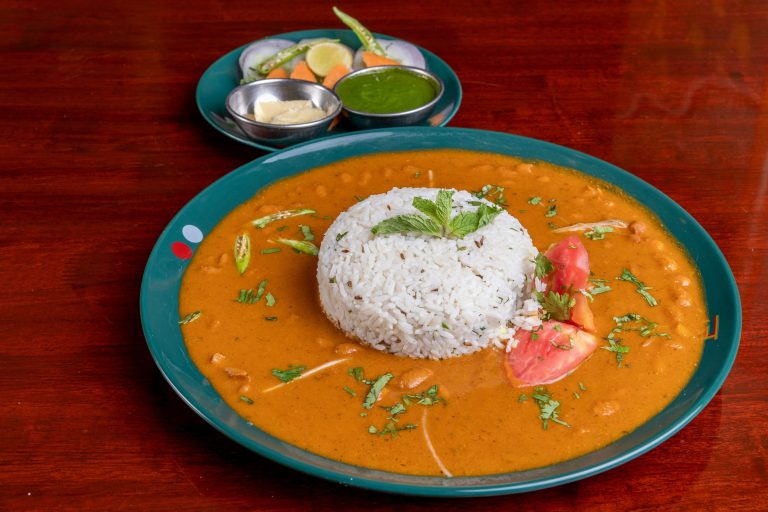
Creamy homestyle butter chicken in a black iron kadai with fresh coriander and naan on a wooden table

Introduction: The Butter Chicken My Nani Made

Every Sunday in our Bandra flat, the smell of butter chicken would drift through all three floors of our chawl. My Nani — God bless her — never once called it “murgh makhani.” To her, it was simply “woh laal chicken.” That red chicken. The one that made grown men queue at the kitchen door with rotis already in hand.

The version you get at restaurants — silky, sweet, and uniform — is not what she made. Hers had texture. It had char. It had a slight bitterness from where the tomatoes caught the bottom of the kadai. And it was, without question, the best thing I have ever eaten.

This article is my attempt to give you that recipe. The real one. With the things that go wrong, the shortcuts that ruin it, and the one step most recipes leave out that makes all the difference.

What Makes Authentic Butter Chicken Different

Restaurant butter chicken is engineered for mass production — it is smooth, consistent, and deliberately mild so it offends no one. Home-style butter chicken is the opposite. It is personal. It carries the fingerprints of whoever made it.

The key differences are: — Tandoor char vs. stovetop cook: Authentic recipes originally required a tandoor. At home, a stovetop grill or even a very hot tawa can approximate this. — The makhani gravy: Made from real tomatoes, not tomato paste from a tin. The slow-cooking of whole tomatoes is non-negotiable. — Butter quantity: Restaurants are cautious. Your Nani was not.

Ingredients (Serves 4–5)

For the chicken marinade: — 750g chicken (bone-in pieces give more flavour; boneless works for ease) — 1 cup full-fat yoghurt (not the watery low-fat kind) — 2 tsp Kashmiri red chilli powder (for colour without excessive heat) — 1 tsp regular red chilli powder — 1 tbsp ginger-garlic paste (freshly made, not jarred) — 1 tsp garam masala — 1 tsp cumin powder — 1 tbsp mustard oil (the secret step most recipes skip) — Salt to taste — about 1.5 tsp — Juice of half a lemon

For the makhani gravy: — 5 large tomatoes, roughly chopped (about 600g) — 2 medium onions, roughly chopped — 8–10 garlic cloves — 1-inch piece ginger — 3 tbsp butter (salted) — 1 tbsp oil (to prevent butter from burning) — 1 tsp Kashmiri chilli powder — 1 tsp coriander powder — 1/2 tsp cumin seeds — 2 green cardamoms — 1 black cardamom — 2 cloves — 1 small piece cinnamon — 1/2 cup fresh cream — 1 tsp sugar or 1 tbsp honey — Salt to taste — Fresh coriander for garnish

Method

Step 1 — Marinate (minimum 4 hours, overnight is best): Mix all marinade ingredients. Score the chicken pieces with a knife — 2 to 3 deep cuts per piece. Coat well. Cover and refrigerate. This step cannot be rushed.

Step 2 — Cook the chicken: On a grill pan or tawa over high flame, cook marinated chicken until you get visible char on the outside. Do not fully cook through — this step is about flavour and colour. Set aside.

Step 3 — Make the base: Heat 1 tbsp oil in a heavy-bottomed pan. Add cumin seeds, both cardamoms, cloves, and cinnamon. Wait until fragrant — about 30 seconds. Add onions and cook on medium heat until golden — 12 to 15 minutes. Do not rush this. Add ginger and garlic. Cook 2 more minutes. Add chopped tomatoes. Add salt. Cover and cook on low heat for 20 minutes until tomatoes completely collapse.

Step 4 — Blend and strain: Let the mixture cool slightly. Blend until smooth. Pass through a fine strainer. This straining step is what gives the gravy its silk.

Step 5 — Build the gravy: In the same pan, heat butter and oil. Add chilli powder and coriander powder. Fry for 30 seconds. Add the strained tomato base. Cook on medium heat, stirring, for 8 to 10 minutes until the gravy thickens and oil separates on the sides. Add sugar or honey. Taste. Add cream. Stir gently.

Step 6 — Add chicken: Add the grilled chicken pieces. Simmer on low flame for 15 minutes. The chicken finishes cooking in the gravy and absorbs the sauce.

Garnish with cream swirl and coriander. Serve with naan or jeera rice.

What Can Go Wrong (And How to Fix It)

Too sour: Your tomatoes were too acidic. Add a pinch more sugar and an extra tablespoon of cream.

Too sweet: Counter with a tiny squeeze of lemon and a pinch of extra chilli.

Gravy is watery: You did not cook the blended base long enough. Keep cooking on medium heat — the water will evaporate. Do not add cornflour. That is a restaurant shortcut.

Chicken is rubbery: You used boneless breast and overcooked it. Thigh pieces are more forgiving. Breast needs less time on the grill.

No smokiness: Rest a small piece of coal on foil in the pan, pour one drop of ghee on the coal, cover for 2 minutes. This is the dhungar method and it transforms the dish.

Mumbai Notes

In Mumbai, we eat butter chicken with tandoori roti from the local dhaba, not with naan. Naan is a restaurant thing. At home, it is roti or rice — specifically, the slightly sticky white rice that has been sitting on the stove a little too long and has developed a crust at the bottom that everyone fights over.

Also: do not refrigerate and reheat butter chicken directly. Add a splash of water and reheat on very low flame. High heat breaks the cream and splits the gravy.

Puran Poli Recipe: How to Make Maharashtra’s Most Beloved Festive Sweet

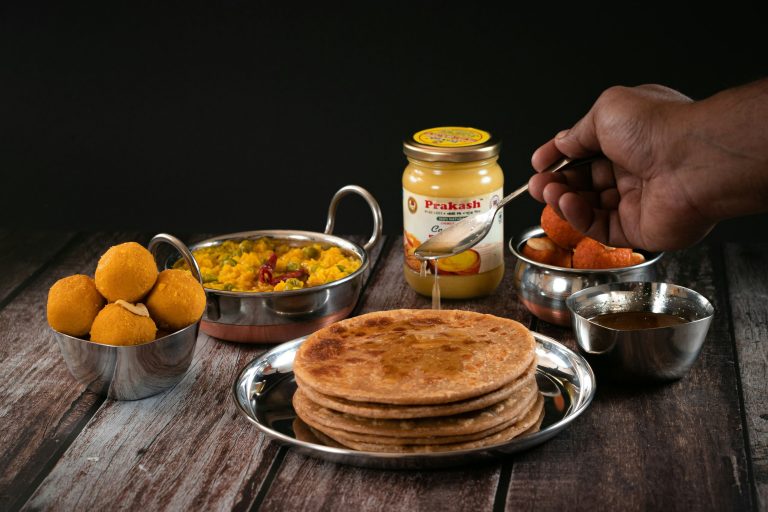
Golden puran poli on a steel plate with a small bowl of ghee and saffron milk on a traditional Maharashtrian thali

Introduction: Puran Poli and the Smell of Festivals

In Maharashtra, there is a particular smell that means a festival is coming. It arrives a day early, the afternoon before Holi or Ganesh Chaturthi or any of the auspicious days my grandmother consulted her panchang to identify. It is the smell of chana dal cooking with jaggery — sweet and slightly caramelised and unmistakably festive.

Puran poli is not everyday food. It is celebration food. And the making of it is itself ceremonial. The whole family gathers. Someone sits with the dal. Someone rolls. Someone stands at the tawa. The kitchen becomes the living room. Everything important happens there.

My aunt made the best puran poli I have ever had. Her secret was patience — more time on the dal than any recipe suggests, more ghee than is arguably sensible, and a dough that rested for a full hour. Here is that recipe.

Ingredients (Makes 10–12 polis)

For the puran (sweet filling): — 1 cup chana dal (split Bengal gram) — 1 cup + 2 tbsp jaggery, grated (adjust to taste — some prefer it sweeter) — 1/2 tsp cardamom powder — 1/4 tsp nutmeg powder — Pinch of saffron dissolved in 1 tbsp warm milk (optional but traditional)

For the dough (cover): — 2 cups whole wheat flour (atta) — 1/4 cup maida (all-purpose flour) — this makes the dough more pliable — 1/2 tsp turmeric (gives the poli its traditional yellow tinge) — 2 tbsp oil — Salt — just a pinch — Warm water to knead — roughly 3/4 cup

For cooking: — Ghee — generous, do not measure nervously — at least 4 to 5 tbsp for cooking 10 polis

Method

Step 1 — Cook the chana dal: Wash and soak chana dal for 1 hour. Drain. Cook in a pressure cooker with 2 cups water until soft — 4 to 5 whistles on high, then 5 minutes on low. The dal should be cooked completely through but should not have become a paste. Individual lentils should be visible but completely soft. If they hold any bite, cook longer. Drain any excess water. This excess water (varan) is saved and made into a soup — do not throw it.

Step 2 — Make the puran: Add the drained, hot dal to a heavy pan. Add grated jaggery. Cook on low-medium heat, stirring constantly. The jaggery will melt and combine with dal. Keep stirring. This mixture must be cooked until it is completely dry — when you drag a spoon through it, it should leave a clean line and not fill back in immediately. This takes 15 to 20 minutes of patience. A puran that is even slightly wet will make rolling impossible. Add cardamom, nutmeg, and saffron milk. Mix well.

Step 3 — Pass the puran through the masher: While still warm, push the puran through a puran patra (traditional hand masher) or a potato ricer. This creates the smooth, uniform texture. If you do not have either, mash vigorously with a fork until lump-free. Let cool completely. Divide into 10 to 12 equal balls.

Step 4 — Make the dough: Combine both flours, turmeric, pinch of salt, and oil. Mix. Add warm water slowly, kneading as you go. Knead for 8 to 10 minutes — the dough should be very soft, slightly sticky, and extremely pliable. If it is stiff, add more water. The softness of the dough is what allows you to stretch it over the filling without tearing.

Rest the dough covered for 1 full hour. This is not optional. The gluten needs to relax or the dough will fight you when you roll.

Step 5 — Stuff and roll: Divide dough into 10 to 12 balls — slightly smaller than the puran balls. Take one dough ball. Flatten in your palm. Place one puran ball in the centre. Bring the edges of the dough up and around the filling, pinching firmly to seal. The seal must be tight or filling escapes during rolling. Gently roll the stuffed ball into a circle — about 6 to 7 inches diameter. Roll slowly and evenly. If it tears, patch with a small piece of dough and press gently.

Step 6 — Cook: Heat a tawa on medium flame. Place the poli on it. Cook until brown spots appear underneath — about 1.5 to 2 minutes. Flip. Apply ghee on the cooked side — generously. Flip again. Apply ghee on this side too. Press gently with a soft cloth (or folded kitchen paper) so the poli puffs and cooks evenly. Total cooking time is about 3 to 4 minutes per poli. The colour should be golden with visible brown spots.

Serve warm with a drizzle of extra ghee. And more ghee when no one is looking.

What Can Go Wrong

Filling bursts through during rolling: Either the dough was too thin in places, the seal was not tight, or the puran was too wet. Wet puran is the most common culprit.

Poli is hard and chewy: The dough was too stiff (not enough water or not rested long enough), or it was cooked on too high a flame which dried it before it cooked through.

Filling is grainy or lumpy: The puran was not passed through the masher or mashed well enough, or the jaggery was not melted properly.

Poli has no flavour: The cardamom and nutmeg were added in too small a quantity. Taste the puran before stuffing — it should be sweetly fragrant.

Too sweet or not sweet enough: Adjust jaggery before cooking is complete. Once the puran is sealed in the poli, you cannot fix it.

The Maharashtrian Table

Puran poli is traditionally served with katachi amti — the dal water (varan) that was drained from the chana dal, tempered with spices and made into a thin, tangy soup. The poli is dipped into the amti between bites. The contrast of sweet poli and tangy amti is the combination — do not skip the amti or you are missing the full picture.

In some homes, it is also served with milk — warm, slightly sweetened, with a tiny pinch of cardamom. My grandmother served it both ways depending on the festival. On Holi, milk. On Ganesh Chaturthi, amti.

The ghee is not optional in either case. It is structural.

Aam ka Achar Recipe: The Mango Pickle My Mother Made Every April

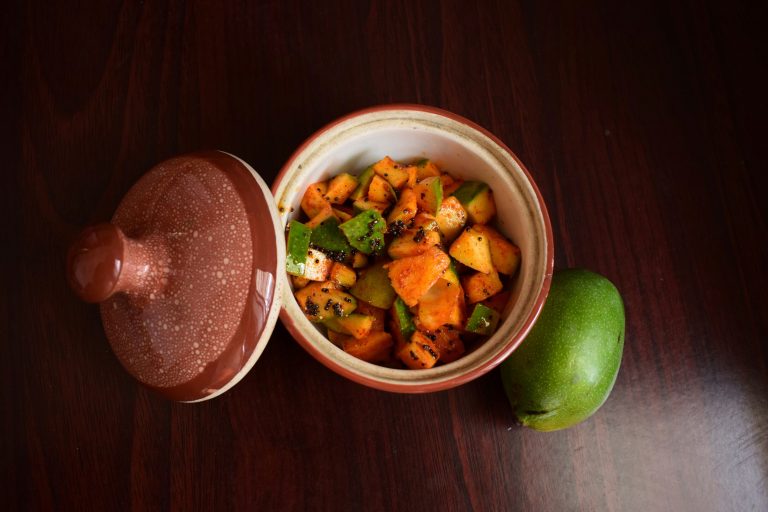
Glass jar of homemade raw mango pickle with whole spices and mustard oil on a rustic wooden surface

Introduction: The Jar on the Kitchen Shelf

Every Indian home of a certain generation had a pickle shelf. Ours was in the kitchen, near the window that got afternoon sun. There were always at least four jars — a lime one, a mixed vegetable one, some namkeen that had been there since possibly before my birth, and the aam ka achar.

The mango pickle was the one we rationed. My mother made it only once a year, in April, when raw Rajapuri mangoes appeared in the Crawford Market. She would buy five kilos, supervise the cutting, and then take over completely for the spicing. The rest of us watched. We were not permitted to help. We did not understand why until we were adults and understood how easy it is to ruin a jar of pickle through one wet spoon.

This recipe is hers, written down properly for the first time.

The Right Mangoes — This Step Is Critical

Not every raw mango works for pickle. You want raw, completely unripe mangoes that are firm, tart, and have thick skins. Varieties that work well: Rajapuri, Totapuri, Langda (when fully raw). Avoid mangoes that have any yellow colouration — they are beginning to ripen and will turn soft in the pickle.

The mango should be so sour that it makes your mouth pucker when you taste a raw piece. That sourness is the backbone of the pickle.

Ingredients (Makes approximately 1.5 kg pickle)

  • 1 kg raw green mangoes, washed and dried thoroughly
  • 3 tbsp mustard oil (for the initial coating)
  • 4 tbsp mustard oil (for pouring over at the end)
  • 2 tbsp salt (for initial drawing out of moisture) + 2 tbsp for the spice mix
  • 2 tbsp red chilli powder
  • 1 tbsp Kashmiri red chilli powder (for colour)
  • 2 tbsp fennel seeds (saunf), coarsely crushed
  • 5 tbsp nigella seeds (kalonji)
  • 1 tbsp fenugreek seeds (methi), lightly crushed
  • 1 tsp turmeric
  • 1/2 tsp asafoetida (hing)

Equipment needed: — Completely dry glass jar with tight lid (1.5 to 2 litre capacity) — Dry clean knife and chopping board — Dry clean bowls throughout — No moisture anywhere at any point

Method

Step 1 — Dry the mangoes: After washing, wipe each mango completely dry with a clean cloth. Then leave them in sun or under a fan for 2 hours. Any moisture is the enemy of pickle.

Step 2 — Cut the mangoes: Using a completely dry knife, cut mangoes into large pieces — roughly 2 to 3 cm chunks. Keep the skin on. Remove the seed but keep the fibrous part around it — it has flavour. Place cut pieces in a large dry bowl.

Step 3 — Salt and draw moisture: Sprinkle 2 tbsp salt over the mango pieces. Mix well. Leave in the bowl for 4 to 6 hours. The salt draws out moisture from the mangoes. After this time, you will see liquid pooled at the bottom. Drain this liquid completely and discard. Pat the mango pieces dry with a cloth.

Step 4 — Spice and oil: In a large dry bowl, mix together all the spices: red chilli powder, Kashmiri chilli powder, fennel seeds, kalonji, fenugreek seeds, turmeric, hing, and remaining 2 tbsp salt. Add 3 tbsp mustard oil to this spice mix and stir to combine. The mixture will smell intensely pungent — this is correct. Add the drained mango pieces. Mix thoroughly until every piece is well coated.

Step 5 — Jar the pickle: Pack tightly into the dry glass jar. Press down firmly so there are no air pockets. Pour 4 tbsp mustard oil over the top — the oil should cover the top surface of the pickle. Close tightly.

Step 6 — The waiting period: Place the jar in a sunny spot for 5 to 7 days. Each day, open the jar using a completely dry spoon, mix the contents, and press back down. Close tightly. After 7 days, taste a piece. It should be tangy, spiced, and the raw edge of the spices should have mellowed. It can be eaten from this point but improves dramatically over 3 to 4 weeks.

What Goes Wrong (And Why Your Grandmother’s Was Better)

Pickle turned soft or mushy: Moisture got in at some point — either the mangoes were not dry enough before cutting, or someone used a wet spoon to remove pickle from the jar. Once soft, the pickle cannot be recovered.

Mold appeared on top: The oil layer on top was not enough, or the jar was not sealed properly. Always ensure the oil completely covers the top surface.

Pickle is too bitter: The fenugreek seeds were not crushed lightly — they released too much. Use lightly crushed, not powdered.

Not sour enough after weeks: Your mangoes were not sour enough to begin with. Check sourness before buying.

Why Grandmothers Were Better: They had experience reading the mangoes, they never rushed the drying step, and they used stone jars (bharni) that maintain consistent temperature. Modern glass jars work well but require more attention to sun placement.

Storage and Use

Once ready, the pickle keeps for 6 to 12 months at room temperature if you follow the golden rule: never introduce moisture. Every time you take pickle from the jar, use a completely dry spoon, close the jar immediately, and ensure oil is covering the surface.

In Mumbai summers, leave the jar in a spot that gets 2 to 3 hours of afternoon sun. In the monsoon, bring it inside and keep in a cool, dry spot.

Serve as a condiment with dal-rice, with thepla for breakfast, or just eat with plain roti when nothing else is available — which, if you are honest about it, is when pickle tastes best.

Vada Pav Recipe: Mumbai’s Soul Food Made Right at Home

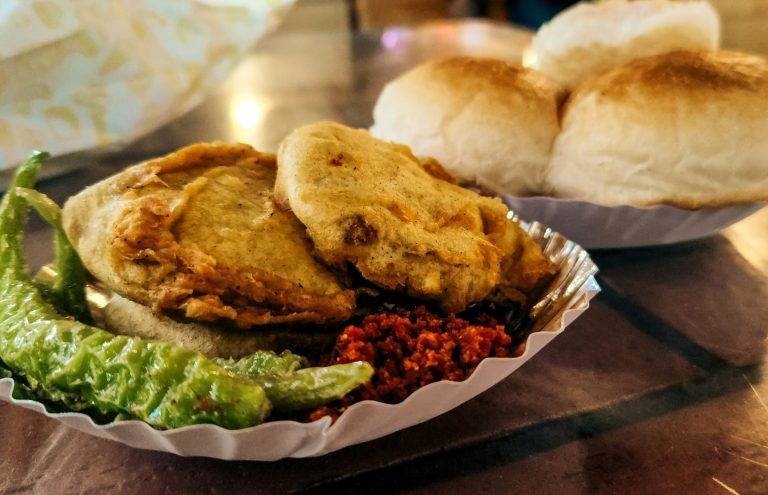
Freshly made vada pav with green chutney and dry garlic chutney on newspaper in Mumbai street style

Introduction: The Rs. 15 That Feeds a City

If you want to understand Mumbai, do not go to Marine Drive at sunset. Go to any railway station at 8am and watch a thousand office-goers eat vada pav while standing, while running, while somehow managing to also check their phones and argue with someone on the other end of the line.

Vada pav is not just food. It is infrastructure. It is what keeps this city moving.

My first memory of vada pav is from Dadar station — age seven, holding my father’s hand, being handed a vada pav wrapped in old newspaper. The garlic chutney stained the paper orange. The vada was crisp on the outside and pillowy inside. The pav was slightly sweet. Together, they were perfect.

Every Mumbaikar has their vada pav origin story. Here is the recipe that comes closest to that memory.

Ingredients (Makes 8 vada pavs)

For the batata vada (potato filling): — 4 large potatoes, boiled and mashed (about 600g after mashing) — 2 tbsp oil — 1 tsp mustard seeds — 1/2 tsp turmeric — 8–10 curry leaves — 3 green chillies, finely chopped (adjust to heat preference) — 1-inch ginger, grated — 4 garlic cloves, grated — 2 tbsp fresh coriander, chopped — Salt to taste — about 1.5 tsp — Juice of half a lemon

For the batter: — 1 cup besan (chickpea flour) — 1/2 tsp turmeric — 1/2 tsp red chilli powder — Pinch of baking soda — Salt to taste — Water to make a thick batter — roughly 3/4 cup

For dry garlic chutney (the heart of vada pav): — 10–12 dry red chillies (Byadagi variety for less heat with good colour) — 1 full head of garlic (about 15 cloves), peeled — 3 tbsp dried coconut (kopra), grated — 1 tsp cumin seeds — Salt to taste

Green chutney: — 1 cup fresh coriander — 10 mint leaves — 2 green chillies — 1/2 inch ginger — 1 tbsp lemon juice — Salt to taste — 2 tbsp water to blend

Also needed: — 8 pav buns (ladi pav — the Mumbai kind, slightly sweet and soft) — Oil for deep frying

Method

Step 1 — Make the dry garlic chutney first (it keeps for 2 weeks): Dry roast the red chillies until slightly darker — 1 to 2 minutes. Remove. In the same pan, dry roast the coconut until golden. Let everything cool. In a mixer, blend chillies, garlic, roasted coconut, and cumin to a coarse powder. Do not add water. This must stay dry. Add salt. Taste. Store in an airtight jar.

Step 2 — Make the potato filling: Heat oil. Add mustard seeds and wait for them to splutter. Add curry leaves — they will crackle loudly, step back slightly. Add ginger, garlic, and green chillies. Cook 1 minute. Add turmeric. Add mashed potato. Mix everything well on low heat. Add lemon juice, coriander, and salt. Mix. Taste. It should be savoury, slightly tangy, with heat. Let it cool completely before shaping.

Step 3 — Shape the vadas: Divide potato mixture into 8 equal portions. Roll each into a smooth ball — the size of a large lemon. Set aside on a plate.

Step 4 — Make the batter: Mix besan, turmeric, chilli powder, baking soda, and salt. Add water slowly, whisking to avoid lumps. Batter should coat the back of a spoon thickly. If it drips off instantly, it is too thin — add more besan.

Step 5 — Fry: Heat oil in a deep pan to 180°C. Test with a drop of batter — it should rise immediately. Dip each potato ball into the batter, coating evenly. Lower into oil carefully. Fry 3 to 4 at a time. Turn occasionally. Fry until deep golden — 3 to 4 minutes. Remove and drain on paper towel.

Step 6 — Assemble: Slice pav almost through but not completely. Press open. Spread green chutney on one side. Add a generous layer of dry garlic chutney on both sides. Place one hot vada inside. Press gently. Eat immediately.

What Can Go Wrong

Batter falls off during frying: Either the batter is too thin or the oil is not hot enough. Test always before the first batch.

Vada is oily inside: Oil was not hot enough. The batter soaked oil instead of crisping instantly.

Filling is bland: You did not season properly. The potato must taste well-seasoned before frying because the batter adds nothing to the interior flavour.

Dry chutney is too hot: Use Byadagi chillies instead of regular red chillies. They give colour without punishing heat.

Pav is wrong: Supermarket bread rolls are not the same as ladi pav. Find an Iyengar Bakery or equivalent in your city. The sweetness and softness of real pav is non-negotiable.

The Mumbai Way

At the station stalls, the vada pav wala does something most home cooks forget — he butters the pav lightly before pressing it around the vada. That small amount of butter is what makes the difference between a good vada pav and a great one.

Also: eat it standing. Something about eating vada pav while seated at a dining table makes it taste 30% less authentic. Mumbai food is meant to be eaten in motion.

Dal Tadka Recipe: The Daal Your Dadi Made (With Science Explained)

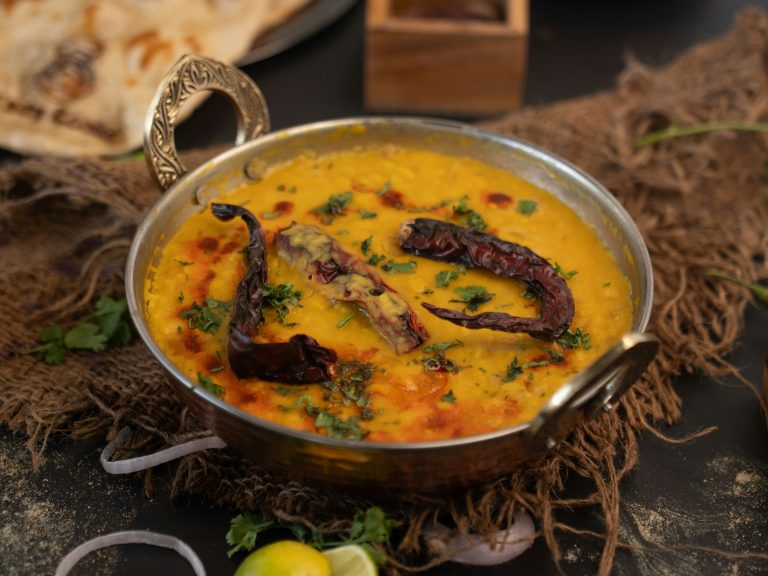
Steaming bowl of dal tadka with sizzling ghee tempering being poured over in a brass serving bowl

Introduction: Every Family Has One Correct Dal

There is a quiet but extremely serious debate that happens in Indian families. It is never spoken aloud directly. It exists in the raised eyebrow when you taste someone else’s dal. It exists in the polite “achha hai” — it’s fine — which means it is absolutely not fine. The debate is this: whose dal is best?

In our family, the answer was my father’s mother. Her dal tadka had a specific quality that no one could quite replicate — a depth that came from long cooking, a smoke from the ghee and whole spices, and a texture that was neither thick nor thin but exactly right.

She is gone now. But I have spent years reverse-engineering her dal, and this recipe is as close as I have come. I will also explain the science of what each step does, because understanding why makes you a better cook.

Which Dal? And Why

Dal tadka is traditionally made with arhar dal (toor dal / split pigeon peas). Some cooks mix it with chana dal for a slightly earthier flavour and better texture contrast. For this recipe, we use a 3:1 ratio of arhar to chana dal — this is the ratio my grandmother used and it is worth following.

Arhar dal cooks soft and creates the creamy base. Chana dal holds its shape slightly, giving the finished dal texture so it does not taste like baby food.

Ingredients (Serves 4–5)

For the dal: — 3/4 cup arhar dal (toor dal) — 1/4 cup chana dal — 3.5 cups water for cooking — 1/2 tsp turmeric — 1 tsp salt

For the base masala: — 2 tbsp ghee — 1 tbsp oil — 1 medium onion, finely chopped — 2 medium tomatoes, finely chopped — 1 tbsp ginger-garlic paste — 2 green chillies, slit — 1/2 tsp turmeric — 1 tsp coriander powder — 1/2 tsp cumin powder — 1 tsp red chilli powder (adjust) — Salt to taste

For the tadka (tempering): — 2 tbsp ghee (do not substitute with oil — this step requires ghee) — 1 tsp cumin seeds — 4–5 garlic cloves, sliced thin — 2 dry red chillies — 1/2 tsp Kashmiri chilli powder — Pinch of asafoetida (hing)

Garnish: — Fresh coriander, chopped — Juice of half a lemon

Method

Step 1 — Wash and soak the dal: Rinse both dals together until water runs clear — usually 4 to 5 washes. Soak for 30 minutes minimum. Soaking reduces cooking time and makes the dal easier to digest. Do not skip.

Step 2 — Cook the dal: In a pressure cooker: Add soaked dal, water, turmeric, and salt. Cook on high until first whistle, then reduce flame and cook 3 more minutes. Let pressure release naturally. The dal should be completely soft — test by pressing between fingers. It should dissolve.

Without pressure cooker: Cook in a covered heavy pot on low-medium heat for 45 to 60 minutes, adding water as needed.

Step 3 — Build the masala: Heat 1 tbsp oil and 1 tbsp ghee in a kadai. Add onions. Cook on medium heat until light golden — 10 minutes. Add ginger-garlic paste. Cook 2 minutes. Add tomatoes and green chillies. Add all powdered spices. Cook until tomatoes are completely broken down and oil separates — 12 to 15 minutes. Do not rush this.

Step 4 — Combine: Add the cooked dal to the masala. Stir well. Add water to adjust consistency — dal tadka should be pourable but not watery. Simmer together for 10 minutes. Adjust salt.

Step 5 — The tadka (this is where magic happens): In a small separate pan, heat 2 tbsp ghee until shimmering hot. Add cumin seeds — they should sputter within 2 seconds of touching the ghee. If they do not, the ghee is not hot enough. Add sliced garlic. Watch it turn golden — this takes only 20 to 30 seconds. Add dry red chillies. Add hing. Add Kashmiri chilli powder. Immediately pour this entire tadka over the dal. Cover the dal for 30 seconds to trap the smoke. Then open and stir.

Add lemon juice and fresh coriander. Serve immediately with rice or roti.

What the Tadka Actually Does (The Science)

The tadka is not just flavour — it is chemistry. When whole spices hit hot ghee, the fat extracts the fat-soluble flavour compounds from the spices far more efficiently than water-based cooking can. The high temperature also triggers Maillard reactions in the garlic, creating hundreds of new flavour compounds in seconds. The hing blooms in the fat, releasing its sulphur compounds that add umami depth.

This is why the tadka must be done last and poured hot. A cool tadka added to hot dal does not have the same effect.

What Can Go Wrong

Dal is too thin: Simmer uncovered on low heat for longer. Or mash some of the dal against the sides of the pot — the starch will thicken it naturally.

Dal is gluey and thick: Add hot water, a little at a time. Never cold water — it makes dal grainy.

Tadka burned the garlic: It happened in a second, did it not? Start again. Burnt garlic ruins everything. The moment you see golden edges, add the next ingredient.

Dal tastes flat: The base masala needed more time. Undercooked masala means dull dal. Also check salt and lemon — both sharpen flavour dramatically.

No depth: You skipped the ghee in the tadka or used oil. Ghee is non-negotiable for this step.