Thailand from India in 2026: How to Plan It Without Overspending

Aerial view of turquoise waters and limestone cliffs in Krabi Thailand

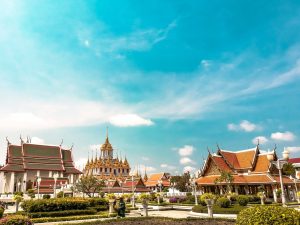
Thailand is the first international trip for a huge number of Indians. It was mine. I went in 2022 with a friend from college, a budget of ₹60,000, and almost no planning. We spent three days in Bangkok and four days in Phuket, spent more than we planned, and came back with the specific kind of exhaustion that comes from doing too many tourist activities too quickly.

Two years later I went again. Better planned, better budget, better experience. This guide is everything I learned from doing it twice.


Visa — Straightforward in 2026

India and Thailand have a visa-on-arrival arrangement. Indian passport holders can get a visa on arrival at major Thai airports — Bangkok Suvarnabhumi, Bangkok Don Mueang, Phuket, and Chiang Mai.

The visa on arrival costs 2,000 Thai Baht (approximately ₹4,800 at current rates). It allows a 15-day stay. You need a return ticket, proof of accommodation, and 10,000 Baht (approximately ₹24,000) in cash or equivalent — you will be asked to show this at immigration.

The queue for visa on arrival at Bangkok can be long — 30–60 minutes on busy days. If you want to skip the queue apply for an e-visa before travel at thaievisa.consular.go.th. The e-visa costs the same, takes 3–5 working days to process, and saves you the airport queue.


Flights — When to Book and What to Pay

From Mumbai, Delhi, Chennai, and Bengaluru there are direct flights to Bangkok on IndiGo, Air India, and Thai Airways. Direct flight return fares range from ₹18,000–₹35,000 depending on dates and how far in advance you book.

The cheapest fares are typically available 6–8 weeks in advance for travel in May, June, September, and October. December-January and April (Songkran festival) are expensive months.

From Mumbai to Bangkok on IndiGo booked 6 weeks in advance costs approximately ₹22,000–₹25,000 return including taxes. This is the baseline to plan around.

Avoid booking through third-party sites for international flights — book directly with the airline or through a reputable platform like MakeMyTrip or Cleartrip for better customer support if anything goes wrong.


Where to Go — The Honest Itinerary

Bangkok — 3 nights minimum

Bangkok is overwhelming and extraordinary in equal measure. The traffic is as bad as Mumbai on a bad day. The food is available on every street corner and is genuinely the best part of Thailand for most Indian visitors — pad thai, green curry, mango sticky rice, and dozens of dishes that Indian palates respond to immediately.

The Grand Palace and Wat Pho are genuinely worth visiting despite the tourist crowds. Go early morning — before 9 AM — and you will have a manageable experience. After 11 AM both sites are packed.

The Chatuchak Weekend Market is the largest market in Asia. If you enjoy markets allow a full day — it is enormous and genuinely interesting even if you buy nothing.

Budget per day in Bangkok: ₹2,500–₹3,500 covering accommodation in a good guesthouse, all meals, and transport.

Chiang Mai — 2 nights

If you have time add Chiang Mai in the north. The old city with its moat and temples, the night bazaar, the cooking classes, the elephant sanctuaries — Chiang Mai has a slower pace than Bangkok and is genuinely charming.

Flights from Bangkok to Chiang Mai on AirAsia cost ₹1,500–₹2,500. Worth it for the change of pace.

Phuket or Krabi — 2 nights

The southern islands are what most people imagine when they think of Thailand. The beaches are real — the water is that colour. Phuket is more developed and more expensive. Krabi and the surrounding islands (Koh Lanta, Phi Phi) are somewhat quieter and worth the extra travel time.

The boat trips to surrounding islands from Krabi typically cost 1,200–1,500 Baht (₹2,900–₹3,600) for a full day including snorkelling equipment.


Complete Budget Breakdown — 7 Days

Expense Amount (₹)
Return flights Mumbai–Bangkok ₹24,000
Visa on arrival ₹4,800
Bangkok accommodation 3 nights ₹4,500
Chiang Mai flight + accommodation 2 nights ₹5,500
Phuket/Krabi accommodation 2 nights ₹4,000
Food 7 days (street food + restaurants) ₹6,000
Local transport (taxi, tuk-tuk, boat) ₹3,500
Activities and entry fees ₹3,000
Miscellaneous + shopping ₹3,000
Total ₹58,300

To keep it under ₹50,000 book flights further in advance (saves ₹5,000–₹8,000), eat street food more consistently, and skip one expensive activity. The core trip is very much doable under ₹50,000 with some discipline.


One Honest Thing Nobody Tells You

Thailand is set up extremely well for tourists and this can work against you if you are not careful. Everything is convenient, everything is available, and it is very easy to spend significantly more than planned because the spending happens in small amounts that feel reasonable individually.

The tuk-tuk ride that costs 200 Baht. The massage that costs 500 Baht. The cocktail at the rooftop bar that costs 400 Baht. None of these feel expensive in isolation. By day 4 you realise you have spent significantly more than the daily budget without making any single big decision to do so.

Track spending daily in a notes app. It takes 2 minutes per day and keeps you aware of where you actually are versus where you planned to be.

Kedarnath Trek 2026: What Nobody Tells You Before You Go

Snow-capped Kedarnath temple surrounded by Himalayan peaks in early morning light

I reached Kedarnath at 5:30 in the morning after walking through the night. My legs had stopped hurting somewhere around the 10 kilometre mark the previous evening — apparently there is a point where exhaustion becomes its own kind of numbness.

The temple was lit by a single string of lights against a completely black sky. The Mandakini river was a sound more than a sight. The temperature was around 4 degrees Celsius in early June. There were maybe forty people at the temple at that hour — pilgrims who had walked through the night like me, sadhus who seemed unaffected by the cold, and a few temple priests preparing for the morning aarti.

I am not a particularly religious person. But standing at 3,583 metres above sea level in the dark, having walked 18 kilometres through the Himalayas to get there, something about the experience goes beyond religion entirely.

Here is everything you need to know to do this trek properly.


The Route — Gaurikund to Kedarnath

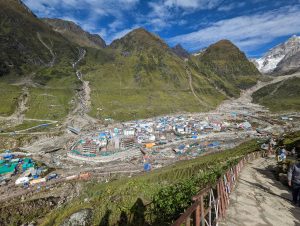
The trek starts at Gaurikund which is the last point motorable vehicles can reach. From Gaurikund to Kedarnath temple is 18 kilometres one way — a total of 36 kilometres for the return journey.

The path is well-maintained and clearly marked. There are tea stalls, small dhabas, and rest points throughout the route. You cannot get lost on this trek — there is essentially one path and thousands of pilgrims walking it daily during the season.

The elevation gain is significant — Gaurikund is at approximately 1,982 metres and Kedarnath temple is at 3,583 metres. That is a gain of 1,601 metres over 18 kilometres. The first 10 kilometres are moderately steep. The last 8 kilometres are steeper and at altitude where the air is noticeably thinner.

Most fit people complete the upward journey in 6–8 hours walking at a moderate pace. The descent takes 4–5 hours.


Three Ways to Do the Trek

Option 1 — Walk both ways The purist option. Costs only food, accommodation, and entry fees. Takes 2 days comfortably — walk up on day 1, stay overnight at Kedarnath, walk down on day 2.

Option 2 — Pony or Palki (Doli) up, walk down Pony charges are approximately ₹2,500–₹3,500 one way depending on season and operator. Palki (carried by porters) costs ₹5,000–₹8,000 one way. Both are legitimate options especially for elderly pilgrims or those with knee problems.

Option 3 — Helicopter Helicopters operate between Phata/Guptakashi and Kedarnath. Return helicopter fare is ₹5,000–₹8,000 per person. Booking is done at heliyatra.irctc.co.in. The helicopter takes 7 minutes each way. This is a completely different experience from the trek — legitimate but not the same thing at all.


What to Carry — Non-Negotiable Items

After doing this trek I can tell you exactly what matters and what is unnecessary weight:

Must carry:

  • Warm jacket — minimum down jacket or equivalent. Temperature drops significantly after 3 PM
  • Rain poncho or waterproof jacket — weather changes without warning
  • Trekking shoes with grip — not sports shoes, not sandals
  • Water bottle — refillable, minimum 1 litre
  • Glucose biscuits and dry fruits — for energy on the trail
  • Basic medicines — altitude sickness pills (Diamox if your doctor recommends), paracetamol, bandages
  • Torch with extra batteries — essential if you plan a night walk
  • Personal ID — Aadhaar card for registration

Leave behind:

  • Heavy bags — carry maximum 8–10 kilos. Anything more punishes you
  • Valuables — leave them at your hotel in Gaurikund or Sonprayag

Accommodation at Kedarnath

GMVN (Garhwal Mandal Vikas Nigam) runs official accommodation at Kedarnath — dormitories and basic rooms. Book at gmvnl.in before visiting. Prices range from ₹500 (dormitory) to ₹2,000 (private room).

Private tent accommodation is also available near the temple complex — basic but functional, typically ₹300–₹500 per person.

One honest warning: do not expect comfort at Kedarnath. The rooms are cold, basic, and often full. Carry your own sleeping bag liner if you are particular about bedding.


Best Time to Go

Kedarnath temple opens in late April or early May (the exact date changes each year based on the Hindu calendar — check the official Char Dham website at chardhamyatra.com) and closes in November.

June before the monsoon arrives is excellent — the snow has melted from the path, flowers are blooming, and the crowds are manageable.

July–August is monsoon season. The trek is still possible but rain makes it harder and landslides occasionally close the route. Not recommended for first-timers.

September–October is arguably the best time — clear skies, good visibility, and the crowds have thinned from the peak summer season.


The Cost — Full Breakdown

Expense Amount
Train/bus to Haridwar from major city ₹500–₹2,000
Haridwar to Sonprayag by shared taxi ₹600
Sonprayag to Gaurikund by jeep ₹50
Registration fee at Gaurikund Free
Accommodation Gaurikund (1 night) ₹500–₹1,500
Food on trail (2 days) ₹800
Accommodation Kedarnath (1 night) ₹500–₹2,000
Temple donation (optional) Your choice
Total excluding travel to Haridwar ₹2,450–₹5,350

Goa in Monsoon: Why I Went in July and Did Not Regret It Once

Lush green coastal cliffs and grey monsoon waves at Goa beach in July

Everyone told me not to go.

My colleague said the beaches would be dirty. My mother said the sea would be dangerous. My friend who goes to Goa every December said monsoon Goa is “not the real Goa.” My cab driver on the way to Mumbai airport said I was wasting money.

I went anyway. It was July, I had four days of leave I needed to use, and flights to Goa in July cost ₹2,800 return from Mumbai. The same flight in December costs ₹11,000.

Here is what actually happened.


What Goa in Monsoon Actually Looks Like

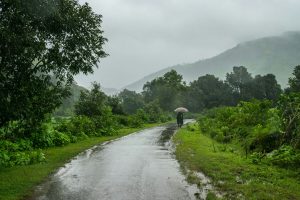
The first thing that hits you when you land in Goa in July is the green. Goa in December is beautiful but it is a dry, dusty, crowded beautiful. Goa in July is green in a way that does not look real — like someone turned the saturation up on everything.

The roads have moss on their edges. The cashew trees are enormous and dark. The Portuguese-era houses look like paintings against the grey sky. There are cows sitting in the middle of every road as always but now they look contemplative rather than inconvenient.

I stayed in a small guesthouse in Assagao in North Goa. The owner, a Goan man in his sixties whose family had run the place for thirty years, made me chai on the first morning and told me July was his favourite month because the tourists who came in July were people who actually wanted to be in Goa rather than people who wanted to post photos of Goa.

I think about that distinction often.


The Beaches — Honest Assessment

The popular beaches — Baga, Calangute, Anjuna — are largely closed in monsoon. The shacks are shut. The water sports are shut. Swimming is genuinely dangerous and several beaches have red flags up for the entire season.

But the beaches themselves are extraordinary. Empty, dramatic, with waves that would be terrifying to swim in but are spectacular to sit near. I spent two hours at Vagator beach on my second day watching the Arabian Sea in full monsoon mode — waves that seemed to come from nowhere, the sound completely overwhelming, the horizon invisible in the mist. There was one other person on the entire beach.

Palolem in South Goa is slightly calmer in monsoon and the beach is walkable. Agonda is quiet and beautiful. Cola beach, which requires a short trek down a hill, is green and dramatic in a way it never is in peak season.

The honest truth: you cannot do beach holiday Goa in monsoon. You can do Goa in monsoon and experience something completely different.


What Is Open in Goa in July

More than people tell you. The inland areas — Old Goa, Panjim, Margao — are fully functional. The Basilica of Bom Jesus and Se Cathedral in Old Goa are open and magnificent in the rain. The Fontainhas area in Panjim with its Latin Quarter lanes and Portuguese houses is best seen in July when the colours are washed fresh and there are no tourist crowds blocking every narrow street.

The spice plantations run tours year-round. I visited the Sahakari Spice Farm near Ponda — ₹500 per person including a traditional Goan lunch that was the best meal of the trip. In December this place has 200 tourists at a time. In July there were eight of us and the guide had time to actually explain things properly.

The restaurants in Panjim and Assagao that cater to residents rather than tourists are all open. I ate at a small place in Panjim that had been running for forty years — prawn curry with rice and a sol kadi for ₹180. The prawn curry was better than anything I ate at the famous beach shacks the previous December visit.


The Real Costs — July vs December Comparison

Item July Cost December Cost
Flight Mumbai–Goa return ₹2,800 ₹11,000
Good guesthouse per night ₹1,200 ₹3,500
Meal at good restaurant ₹350 ₹800
Taxi from airport ₹700 ₹700
Total 4 days budget ₹12,000 ₹32,000

My entire four-day Goa trip in July cost less than the flights alone would have cost in December.


Who Should Go to Goa in Monsoon

Go if you want genuine quiet, green Goa without the crowds and noise. Go if you want to eat at real Goan restaurants without waiting 45 minutes for a table. Go if you want to photograph Goa without strangers in every frame. Go if your budget is limited and you want to experience Goa properly.

Do not go if you need beach swimming, water sports, or the Baga-Calangute party scene. That Goa does not exist in July. It comes back in October.

Manali on a Budget: How I Did 5 Days for ₹13,500 from Delhi

Snow-covered Manali mountain valley with wooden guesthouses and pine trees in winter

My first trip to Manali cost ₹38,000. It was 2019, I booked everything through a travel agent, stayed at a resort that looked better in photos than in person, and spent most of the trip in a vehicle being taken from one “tourist spot” to the next on a schedule that left no room for actually being in Manali.

My second trip cost ₹13,500 for five days including the overnight bus from Delhi. I planned everything myself, stayed in guesthouses recommended by people who had actually been there, and ate where locals ate.

The second trip was three times better in every way. Here is exactly how I did it.


Getting There — The Overnight Bus from Delhi

The most practical way to reach Manali from Delhi is the overnight Volvo bus from Kashmere Gate ISBT. It departs around 5–6 PM and arrives in Manali the next morning around 10–11 AM depending on road conditions.

Cost: ₹700–₹1,400 depending on operator and season. I booked through RedBus two weeks in advance and got a window seat on the upper deck for ₹950.

The journey is approximately 14 hours. The road from Mandi onward is winding mountain road — if you are prone to motion sickness take a tablet before boarding. The views from Kullu onward in the morning light make every uncomfortable hour worth it.

Flying to Bhuntar airport near Kullu is faster but expensive — ₹4,000–₹8,000 one way from Delhi depending on dates. For a budget trip the bus is the obvious choice.


Where to Stay — Skip the Resorts

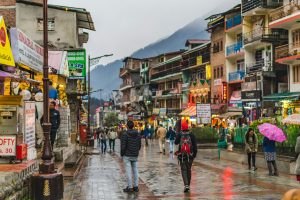
Manali has two distinct areas: Mall Road which is the main tourist strip and Old Manali which is a 20-minute walk uphill from Mall Road.

Stay in Old Manali. Every time.

Old Manali has guesthouses run by local Himachali families that charge ₹600–₹1,200 per night for a clean room with mountain views. The area has cafes, small restaurants, and a pace of life that feels like a hill town rather than a tourist trap.

I stayed at a family-run guesthouse where the owner’s mother made paranthas every morning included in the room price. The room had a wooden balcony with a direct view of the Beas river and the mountains beyond. It cost ₹800 per night.

The same view from a Mall Road resort would cost ₹4,000 per night and feel less authentic.


What to Actually Do in Manali

Day 1 — Arrive and recover The bus journey is tiring. Walk around Old Manali, find your guesthouse, eat something warm. The market near Old Manali temple has good momos — ₹80 for a plate of steamed veg momos that will be the best momos you have eaten.

Day 2 — Solang Valley Take a shared taxi from Mall Road to Solang Valley — ₹150 per person each way. In summer it is green and the views are extraordinary. In winter there is snow. The activities at Solang — zorbing, rope courses, horse riding — cost extra and are optional. Just being there and walking is enough.

Day 3 — Rohtang Pass (if open) or Naggar Castle Rohtang Pass at 3,978 metres requires a permit (₹500, booked online at rohtangpermits.nic.in) and is only open May to October. The views are extraordinary but the road is crowded in peak season. Go early — before 7 AM if possible.

If Rohtang is closed or you prefer crowds, Naggar Castle in the Kullu Valley is a 45-minute drive from Manali, costs ₹100 entry, and has the best mountain views of any heritage site in Himachal Pradesh.

Day 4 — Hadimba Temple and Old Manali walk Hadimba Devi Temple is a 15-minute walk from Old Manali. Built in 1553 in the middle of a cedar forest, it is one of the most genuinely atmospheric temple complexes in North India. Go early morning before the tourist rush — before 8 AM the forest around the temple is quiet and the deodar trees are extraordinary.

Day 5 — Leave The Volvo back to Delhi departs around 5–6 PM. Spend the day walking, eating, buying Himachali woolens from the market if you want. The woolen socks sold near the temple for ₹80–₹100 are genuine and warm and make good gifts.


The Actual Budget Breakdown

Expense Amount
Delhi to Manali bus (return) ₹1,900
Accommodation 4 nights × ₹800 ₹3,200
Food 5 days × ₹400/day ₹2,000
Solang Valley taxi + activities ₹800
Rohtang permit + taxi ₹1,200
Hadimba temple + local walks ₹200
Miscellaneous ₹500
Total ₹9,800

I spent ₹13,500 total because I bought two Himachali shawls as gifts and ate at a slightly nicer restaurant one evening. The core trip is genuinely doable under ₹10,000 from Delhi.


One Honest Warning

Manali in May-June and in October is extremely crowded. The roads into town can jam for hours. If your dates are flexible, go in late September or early July — the crowds are smaller, the prices are lower, and the mountains look exactly the same.

Best Hill Stations Near Mumbai: Where to Actually Go on a Weekend

Misty green valleys and winding road at a hill station near Mumbai during monsoon season

Every Mumbai resident has the same conversation with themselves on a hot Wednesday in May: I need to get out of this city this weekend. Then Friday comes, the traffic on the expressway looks impossible, the hotels in Lonavala are ₹8,000 for a Saturday night, and somehow you end up staying home.

I have done this trip-planning-then-cancelling cycle more times than I want to admit. But I have also actually made it out on enough weekends to know which destinations are worth the effort and which ones are not.

Here is the honest guide.


Lonavala — Honest Assessment

Everyone goes to Lonavala. This is both its greatest strength and its biggest problem.

The ghats around Lonavala — Bhushi Dam, Tiger’s Leap, Rajmachi viewpoint — are genuinely beautiful especially in monsoon when everything is green and the waterfalls are running. The problem is that on any Saturday between June and September, every viewpoint has approximately 400 people at it simultaneously, the road from the expressway to the main market is a complete traffic jam, and the famous chikki shops on the main street are more tourist trap than genuine local specialty.

Go to Lonavala if: You are going mid-week, or you are going in October-November when the crowds thin. Or if you want to trek to Rajmachi or Lohagad fort which are genuinely excellent and not as crowded as the main tourist spots.

Skip Lonavala if: You are going on a Saturday in July with no specific plan beyond “going to Lonavala.” You will spend four hours in traffic and two hours at a waterfall with a thousand strangers.

Cost for a day trip from Mumbai: ₹800–₹1,200 by train (Deccan Express is excellent), ₹2,500–₹4,000 by car including fuel and expressway toll.


Mahabaleshwar — Best Overall

Mahabaleshwar is 260 kilometres from Mumbai — three hours in good traffic — and worth every minute of the drive.

The strawberry farms, the viewpoints over the Krishna Valley, the old British-era bazaar at Panchgani — Mahabaleshwar has more to offer than any hill station of comparable distance from Mumbai. The Venna Lake boat rides are touristy but pleasant. The Pratapgad Fort 24 kilometres from Mahabaleshwar is a Maratha fortress with extraordinary views that most day-trippers skip.

The best thing I did in Mahabaleshwar was buy a kilogram of fresh strawberries directly from a farm for ₹80 and eat them while sitting on a rock above the clouds. This requires absolutely no planning, no booking, and no crowds.

Cost for 2 days: ₹3,500–₹5,000 per person including bus from Mumbai (MSRTC Shivneri, ₹400 one way), basic hotel, and food.


Matheran — The Underrated One

Matheran is the closest hill station to Mumbai — 83 kilometres from the city, accessible by local train to Neral and then the famous toy train (or a 2-hour trek) to the hill station itself.

What makes Matheran different from every other hill station: no vehicles allowed. No cars, no motorcycles, no autorickshaws. The hill station is entirely pedestrian. The silence is extraordinary — you can hear birds, wind, and other people walking, and nothing else.

The red laterite paths through the forest, the viewpoints over the plains, the small market with its horse rides and local food — Matheran has a character that development has not yet destroyed, partly because the vehicle ban makes it impractical for large tourist buses.

The toy train from Neral to Matheran (when running) is one of the most genuinely pleasant 45 minutes available within 2 hours of Mumbai. Check the current schedule at the Neral station before planning around it.

Cost for a day trip: ₹600–₹800 by local train to Neral then toy train, ₹200 entry fee for the hill station, food on the hill ₹400. Total day trip under ₹1,500.


Igatpuri — For the Trekkers

Nobody who is not a trekker goes to Igatpuri. This is precisely why trekkers love it.

The base for treks to Kalsubai (the highest peak in Maharashtra), Harishchandragad, and several other Western Ghats forts, Igatpuri is a small town with basic accommodation and excellent access to trails that are spectacular in monsoon.

The Vipassana meditation centre at Dhamma Giri near Igatpuri runs 10-day courses year-round — free of charge, including food and accommodation. This is not a tourist activity but worth mentioning for anyone looking for something genuinely different within 2 hours of Mumbai.

Cost for Kalsubai trek: ₹150 by local train to Igatpuri, ₹100 shared jeep to base village, zero entry fee. The entire trek day including food costs under ₹800 from Mumbai.