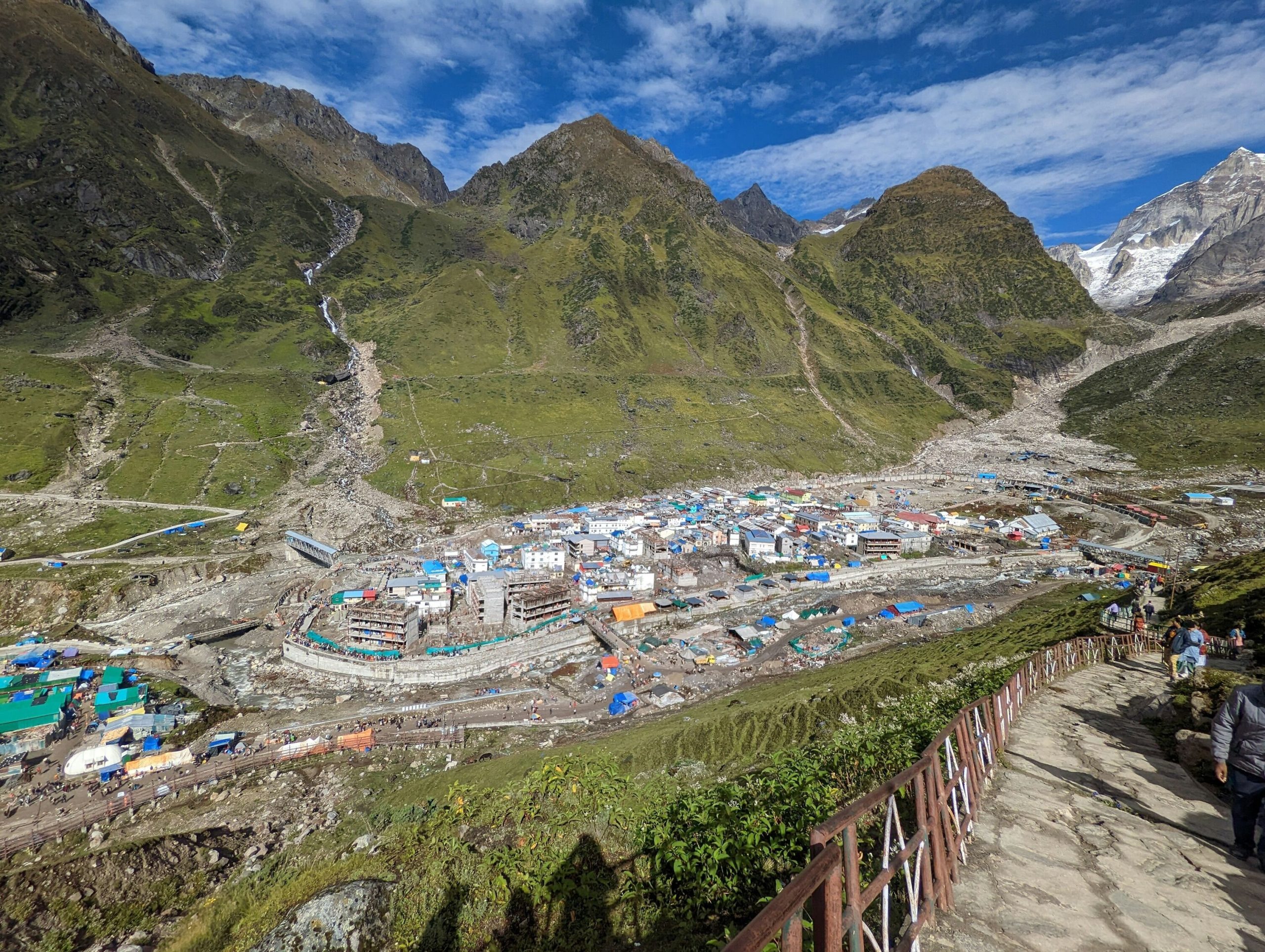
I reached Kedarnath at 5:30 in the morning after walking through the night. My legs had stopped hurting somewhere around the 10 kilometre mark the previous evening — apparently there is a point where exhaustion becomes its own kind of numbness.
The temple was lit by a single string of lights against a completely black sky. The Mandakini river was a sound more than a sight. The temperature was around 4 degrees Celsius in early June. There were maybe forty people at the temple at that hour — pilgrims who had walked through the night like me, sadhus who seemed unaffected by the cold, and a few temple priests preparing for the morning aarti.
I am not a particularly religious person. But standing at 3,583 metres above sea level in the dark, having walked 18 kilometres through the Himalayas to get there, something about the experience goes beyond religion entirely.
Here is everything you need to know to do this trek properly.
The Route — Gaurikund to Kedarnath
The trek starts at Gaurikund which is the last point motorable vehicles can reach. From Gaurikund to Kedarnath temple is 18 kilometres one way — a total of 36 kilometres for the return journey.
The path is well-maintained and clearly marked. There are tea stalls, small dhabas, and rest points throughout the route. You cannot get lost on this trek — there is essentially one path and thousands of pilgrims walking it daily during the season.
The elevation gain is significant — Gaurikund is at approximately 1,982 metres and Kedarnath temple is at 3,583 metres. That is a gain of 1,601 metres over 18 kilometres. The first 10 kilometres are moderately steep. The last 8 kilometres are steeper and at altitude where the air is noticeably thinner.
Most fit people complete the upward journey in 6–8 hours walking at a moderate pace. The descent takes 4–5 hours.
Three Ways to Do the Trek
Option 1 — Walk both ways The purist option. Costs only food, accommodation, and entry fees. Takes 2 days comfortably — walk up on day 1, stay overnight at Kedarnath, walk down on day 2.
Option 2 — Pony or Palki (Doli) up, walk down Pony charges are approximately ₹2,500–₹3,500 one way depending on season and operator. Palki (carried by porters) costs ₹5,000–₹8,000 one way. Both are legitimate options especially for elderly pilgrims or those with knee problems.
Option 3 — Helicopter Helicopters operate between Phata/Guptakashi and Kedarnath. Return helicopter fare is ₹5,000–₹8,000 per person. Booking is done at heliyatra.irctc.co.in. The helicopter takes 7 minutes each way. This is a completely different experience from the trek — legitimate but not the same thing at all.
What to Carry — Non-Negotiable Items
After doing this trek I can tell you exactly what matters and what is unnecessary weight:
Must carry:
- Warm jacket — minimum down jacket or equivalent. Temperature drops significantly after 3 PM
- Rain poncho or waterproof jacket — weather changes without warning
- Trekking shoes with grip — not sports shoes, not sandals
- Water bottle — refillable, minimum 1 litre
- Glucose biscuits and dry fruits — for energy on the trail
- Basic medicines — altitude sickness pills (Diamox if your doctor recommends), paracetamol, bandages
- Torch with extra batteries — essential if you plan a night walk
- Personal ID — Aadhaar card for registration
Leave behind:
- Heavy bags — carry maximum 8–10 kilos. Anything more punishes you
- Valuables — leave them at your hotel in Gaurikund or Sonprayag
Accommodation at Kedarnath
GMVN (Garhwal Mandal Vikas Nigam) runs official accommodation at Kedarnath — dormitories and basic rooms. Book at gmvnl.in before visiting. Prices range from ₹500 (dormitory) to ₹2,000 (private room).
Private tent accommodation is also available near the temple complex — basic but functional, typically ₹300–₹500 per person.
One honest warning: do not expect comfort at Kedarnath. The rooms are cold, basic, and often full. Carry your own sleeping bag liner if you are particular about bedding.
Best Time to Go
Kedarnath temple opens in late April or early May (the exact date changes each year based on the Hindu calendar — check the official Char Dham website at chardhamyatra.com) and closes in November.
June before the monsoon arrives is excellent — the snow has melted from the path, flowers are blooming, and the crowds are manageable.
July–August is monsoon season. The trek is still possible but rain makes it harder and landslides occasionally close the route. Not recommended for first-timers.
September–October is arguably the best time — clear skies, good visibility, and the crowds have thinned from the peak summer season.
The Cost — Full Breakdown
| Expense | Amount |
|---|---|
| Train/bus to Haridwar from major city | ₹500–₹2,000 |
| Haridwar to Sonprayag by shared taxi | ₹600 |
| Sonprayag to Gaurikund by jeep | ₹50 |
| Registration fee at Gaurikund | Free |
| Accommodation Gaurikund (1 night) | ₹500–₹1,500 |
| Food on trail (2 days) | ₹800 |
| Accommodation Kedarnath (1 night) | ₹500–₹2,000 |
| Temple donation (optional) | Your choice |
| Total excluding travel to Haridwar | ₹2,450–₹5,350 |